
LuminPack™ Container Energy Storage System
A liquid-cooled, factory-integrated battery energy storage system delivering 2.2 MWh in a standard 20-foot container — engineered for grid-scale safety, plug-and-play deployment, and 20 years of dependable operation.
Request a Quote View SpecificationsLarge Containerized Energy Storage, Refined
The LuminPack battery energy storage system (BESS) is built on advanced Lithium Iron Phosphate (LFP) cells with a 12-patented low calorific value architecture. Purpose-designed DC/AC cabinets and an automated active fire protection system deliver safety margins verified by UL 9540A large-scale fire testing.
Cylindrical cells with full polar lugs improve efficiency by 3%, while optimized busbar nodes and intelligent liquid-cooling thermal management lift round-trip efficiency above 92% — ahead of the industry average. A welding-free assembly extends service life to 10–20 years and keeps O&M costs low.
New to containerized storage? Read our containerized BESS design, safety & cost guide for the full engineering context.
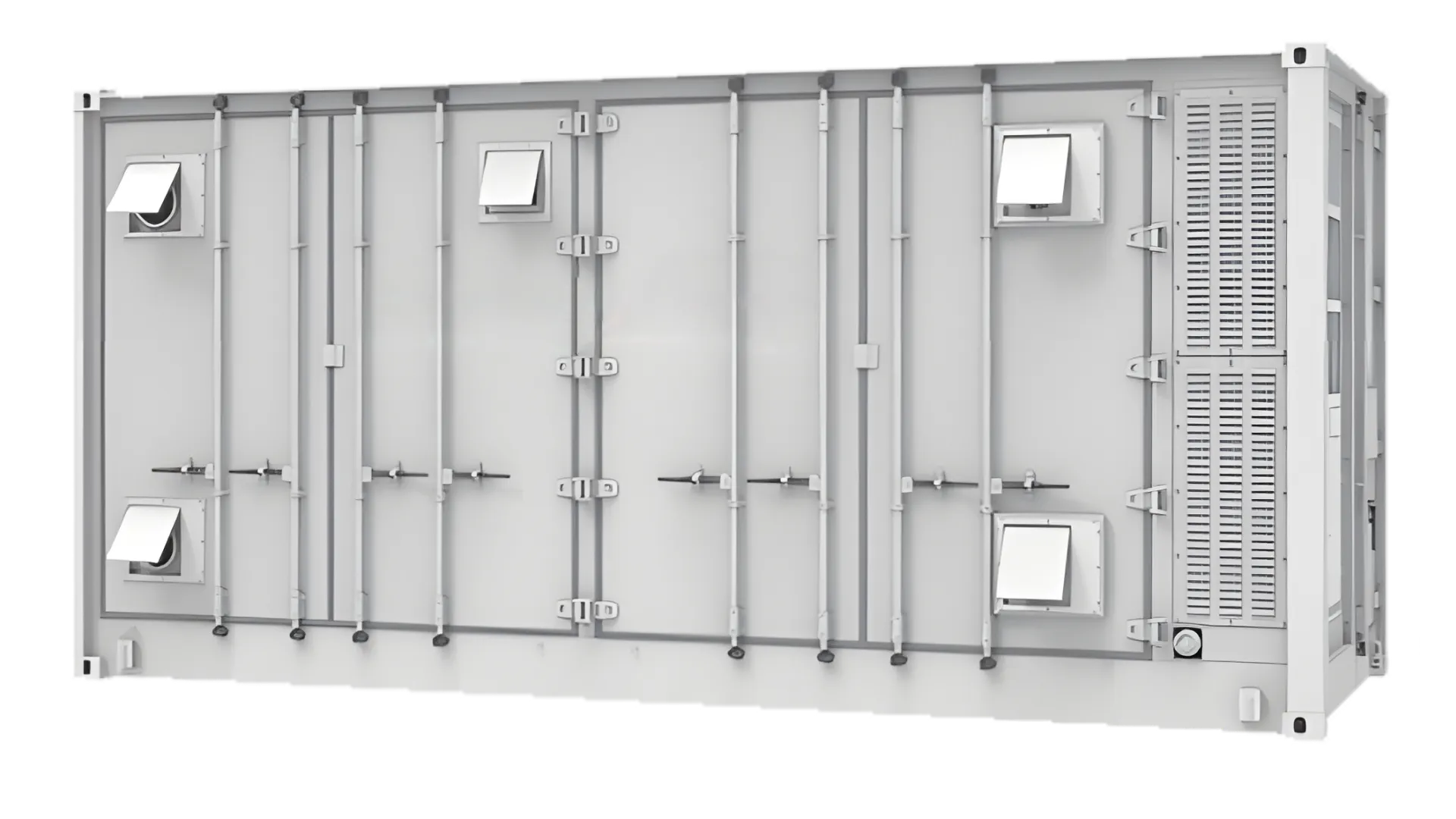
Easy & Rapid Installation
Every LuminPack unit leaves the factory fully integrated and tested — batteries, PCS, thermal management, and fire suppression in one enclosure, ready for immediate plug-and-play operation.
- Aisle-free layout: removing the internal maintenance aisle pushes capacity to 2.2 MWh in a standard 20-foot footprint — maximum energy density per square meter of site.
- Faster energization: single-lift placement and pre-terminated connections compress on-site works from weeks to days.
- Low-touch operation: minimal scheduled maintenance, backed by a warranty of up to 20 years.
Fully Integrated Modular Architecture
LuminPack delivers superior power and reliability at a lower lifetime cost. Each battery module is paired with dedicated power conversion (PCS), raising system-level efficiency and isolating faults at module level so a single event never cascades through the enclosure.
Seamless over-the-air (OTA) software updates keep every deployed LuminPack improving through its service life — new dispatch strategies, refined thermal curves, and market functions arrive without a site visit.
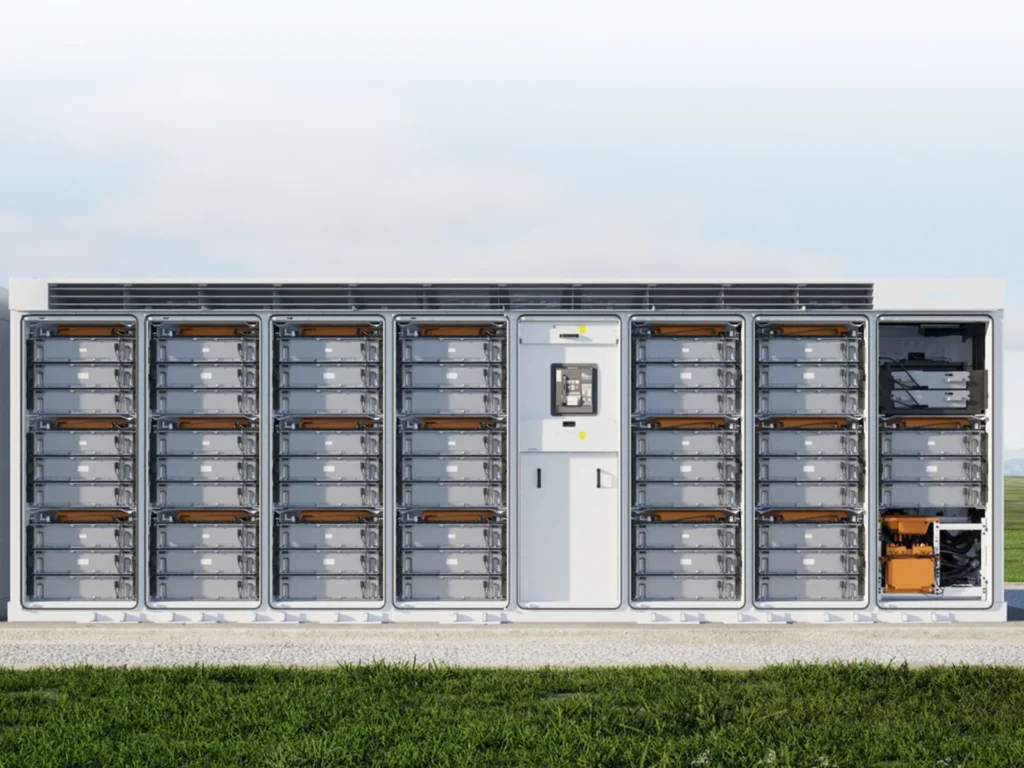
Safe by Design: Cell-to-System Protection
LuminPack ranks among the safest utility-scale battery storage solutions available, protected by four independent layers:
- Cell: LFP chemistry with low calorific value architecture — inherently resistant to thermal runaway, proven in UL 9540A fire testing.
- Module: combustible gas detection and module-level electrical isolation catch anomalies at the source.
- Enclosure: active smoke extraction and targeted fire suppression contain any event within the container envelope.
- System: 24/7 remote monitoring with automated alarm escalation — absolute peace of mind, around the clock.

Intelligent EMS Integration
A high-performance energy storage OS engineered for decarbonized grids. The proprietary Energy Management System stacks applications dynamically — real-time dispatch, peak shaving, frequency response, and automated market bidding can run concurrently on the same asset, maximizing revenue per MWh installed.
Evaluating the business case? Our framework for C&I energy storage ROI walks through payback, demand-charge savings, and stacked-value modeling.
Versatile Grid-Scale Applications
Renewable Integration
Store surplus solar and wind generation, then dispatch firm, schedulable clean energy exactly when demand peaks.
Peak Shaving & Demand Management
Discharge through peak tariff windows to cut demand charges for C&I facilities — see how commercial battery storage reduces demand charges.
Frequency Regulation
Sub-second power injection or absorption stabilizes grid frequency and voltage as renewable penetration climbs.
Microgrids & Resilience
Anchor islanded microgrids and keep mission-critical facilities powered through extended grid outages.
From Order to Energization
Site & Grid Assessment
Load profiles, interconnection requirements, and layout engineering — sized to your application stack.
Factory Integration
Batteries, PCS, cooling, and fire systems assembled and burn-in tested as one unit before shipment.
Delivery & Placement
Standard container logistics worldwide; single crane lift onto a prepared foundation.
Commissioning
Grid connection, EMS configuration, and operator handover with 24/7 remote monitoring enabled.
Technical Specifications
| Parameter | LuminPack Specification |
|---|---|
| System Nominal Energy | Up to 2,200 kWh / 2.2 MWh per enclosure |
| Battery Chemistry | Lithium Iron Phosphate (LFP), cylindrical cells with full polar lugs |
| Round-Trip Efficiency (RTE) | > 92% |
| Thermal Management | Intelligent liquid cooling |
| Enclosure / Footprint | Standard 20-foot container, aisle-free layout |
| Cycle Life | > 6,000 cycles @ 100% DoD |
| Ingress Protection | IP54 enclosure / IP66 components |
| Safety & Certifications | UL 9540A, UL 1973, IEC 62619, CE |
| Warranty | Up to 20 years |
Frequently Asked Questions
Why choose a containerized system over separate battery cabinets?
A factory-integrated container arrives as one tested unit — batteries, PCS, cooling, and fire suppression already engineered together. That eliminates on-site integration risk, compresses installation to days, and gives a single point of warranty responsibility. Our containerized BESS guide compares the approaches in detail.
Can capacity be expanded after the initial deployment?
Yes. LuminPack is designed for multi-enclosure deployments: additional containers connect in parallel under the same EMS, and the control layer handles dispatch across enclosures — a common path as loads grow or new revenue streams open.
What does UL 9540A verification actually mean?
UL 9540A is the large-scale fire test standard used by permitting authorities to evaluate thermal runaway propagation. Verified test data simplifies fire-marshal review and insurance underwriting — often the difference between a smooth approval and months of delay.
Which applications can run simultaneously on one system?
The EMS supports application stacking: for example, daily peak shaving plus frequency-regulation market participation plus backup reserve. The optimal stack depends on your tariff structure and grid market — talk to our engineers for a revenue model on your site data.
Ready to Specify LuminPack for Your Project?
Send us your load profile and grid connection details — our engineering team will return a system configuration, energization plan, and factory-direct quotation.
Get a Custom Proposal