
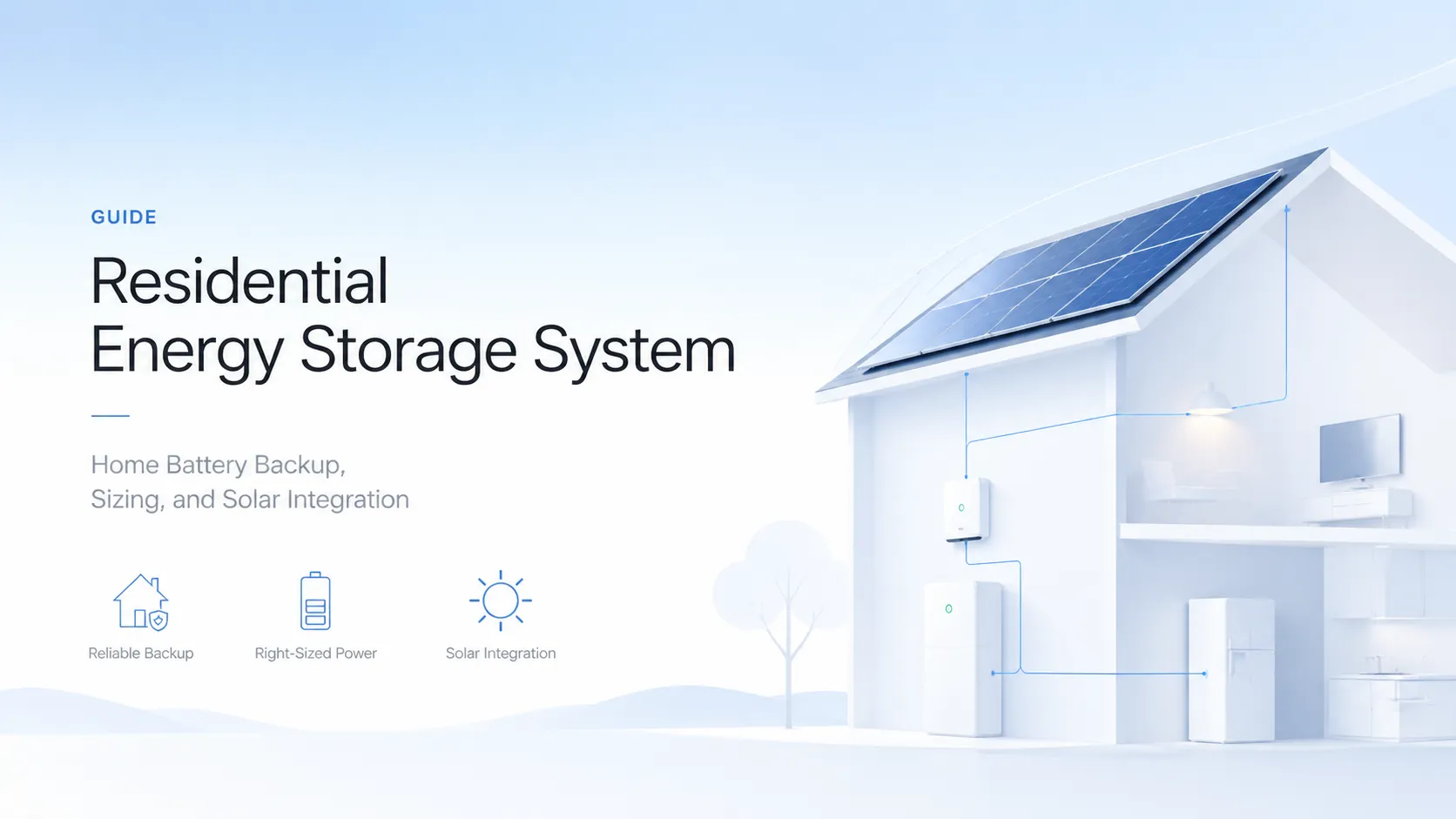
A residential energy storage system helps homeowners store electricity for later use, improve solar self-consumption, and maintain backup power during outages. As more households adopt rooftop solar and face rising electricity prices, home battery backup has become a practical solution rather than a niche upgrade.
If you are comparing household storage options, this guide explains how system sizing works, what components matter most, and how to connect home battery storage with a broader energy storage system solution strategy.
What Is a Residential Energy Storage System?
A residential energy storage system is a battery-based setup designed for home use. It typically includes battery modules, a battery management system (BMS), an inverter, protection devices, monitoring software, and sometimes an energy management controller. The system stores electricity from the grid or solar PV and discharges it when the home needs power.
- Backup power during utility outages
- Higher solar self-consumption
- Time-of-use bill optimization
- Reduced reliance on the grid
- Better visibility into home energy use
When Does Home Battery Backup Make Sense?
Home battery backup is especially attractive when homeowners want resilience and better control over electricity costs. The strongest use cases usually combine at least two of the following: frequent outages, high retail electricity prices, a solar PV system, or time-of-use tariffs.
- Outage protection: Keep critical loads such as lighting, internet, refrigeration, and medical devices online.
- Solar optimization: Store excess midday generation for evening use.
- Bill savings: Charge when tariffs are low and discharge during expensive periods.
- Energy independence: Reduce dependence on uncertain grid conditions.
How to Size a Residential Energy Storage System
Sizing should start with household loads, not battery marketing claims. A practical design looks at daily consumption, peak loads, backup priorities, solar production, and the desired number of backup hours.
| Design Factor | Why It Matters |
|---|---|
| Daily energy use (kWh) | Sets the baseline for usable storage capacity. |
| Critical loads | Determines what must stay powered during outages. |
| Peak power demand (kW) | Affects inverter size and discharge capability. |
| Solar PV generation | Influences charging profile and self-consumption gains. |
| Autonomy target | Defines whether backup should last a few hours or longer. |
For example, a family that mainly wants essential-load backup may need a smaller system than a homeowner trying to maximize evening solar use and support larger appliances. Right-sizing reduces overspending and improves the return on storage investment.
Solar Integration: Why Storage Works Better with PV
Pairing storage with rooftop PV makes the system much more valuable. Instead of exporting all surplus solar to the grid, the home battery can store excess energy and discharge it after sunset. This improves self-consumption and can reduce exposure to lower export tariffs.
Households already exploring distributed solar can also compare use cases with small-scale solutions such as balcony solar systems and full-home systems such as this home solar power guide.
Key Components to Compare Before Buying
- Battery chemistry: LFP is widely chosen for safety and long cycle life.
- Usable capacity: Focus on usable energy, not just nominal capacity.
- Inverter compatibility: Confirm support for the chosen PV and backup configuration.
- Scalability: Check whether the system can expand later.
- Monitoring: Good software improves system visibility and operational control.
- Installer quality: Installation design affects safety and performance as much as hardware choice.
Residential vs. Commercial Storage: Do Not Use the Same Buying Logic
Residential and commercial systems solve different problems. Homes typically focus on resilience, solar self-consumption, and predictable bill savings. Commercial projects focus more on peak shaving, demand charge reduction, and site-level energy management. If your project is business-oriented, start with a dedicated commercial battery storage planning guide rather than applying residential assumptions.
FAQ: Residential Energy Storage System
How long can a home battery power a house?
It depends on usable battery capacity and which loads are backed up. A system designed for essential loads can last much longer than one trying to run whole-home air conditioning and electric heating.
Can I add storage to an existing solar system?
Yes, many homeowners retrofit battery storage to existing PV systems. Compatibility depends on inverter setup, wiring architecture, and backup goals.
What is the most important sizing mistake to avoid?
The biggest mistake is sizing only by headline battery capacity without checking real load profiles, peak power needs, and the actual backup plan.
A well-designed residential energy storage system should match your home’s actual energy behavior, not just product catalog specs. If you need a broader overview of system architectures and product options, start from the main energy storage system pillar page.