
By Luminvolt Engineering Team
A solar tracker vs fixed mount decision is a yield-versus-cost choice. A single-axis tracker typically adds 15–25% annual energy compared with a fixed-tilt ground mount, but it also adds motors, controllers and extra O&M.
This guide is the full solar tracker vs fixed mount comparison: how a tracker works, single-axis vs dual-axis, CAPEX and payback, and the sites where a fixed ground mount still wins. If you meant a seasonal tilt change with no motors, that is fixed vs adjustable mounting, not a tracker. When you are ready to spec hardware, open the single axis solar tracker manufacturer page.
What is a Solar Sun Tracker and How Does It Work?
A solar sun tracker is an automated mechanical mounting structure that constantly adjusts the orientation of photovoltaic panels so they directly face the sun from sunrise to sunset. Solar panels generate maximum power when sunlight strikes them at a perfect 90-degree angle. As the earth rotates, the sun moves across the sky, causing stationary panels to lose efficiency during the early morning and late afternoon hours.
Modern trackers solve this problem using three main components:
- Sensors and Astronomical Algorithms: The system calculates the exact position of the sun using GPS coordinates, time, and occasionally light sensors to correct for heavy cloud cover or diffused light.
- Controllers: The onboard computer processes the positional data and determines the optimal tilt angle for the module arrays.
- Actuators and Motors: These mechanical components physically drive the steel structures, gently turning the heavy panel arrays to match the controller’s calculations.
Single-Axis vs. Dual-Axis Solar Tracking Systems
When selecting a solar tracking system, developers typically choose between single-axis and dual-axis configurations. The decision rests on land availability, latitude, and budget.
Single-Axis Solar Trackers
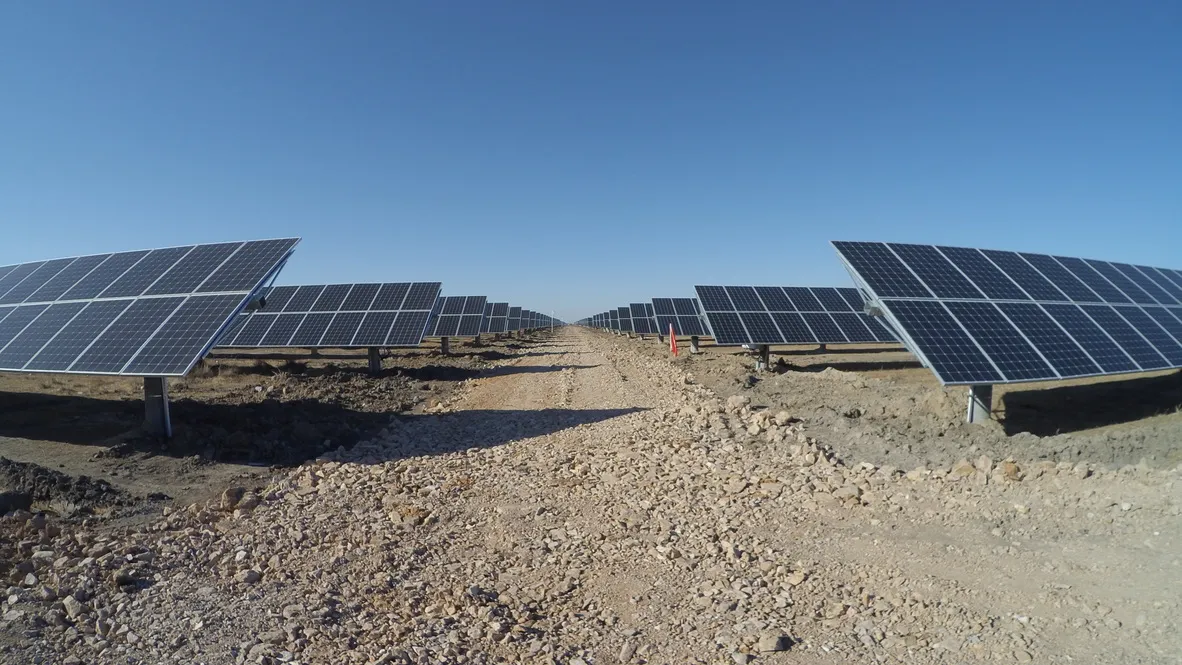
Single-axis trackers rotate the solar panels along a single line—usually running north to south. They track the sun’s east-to-west movement throughout the day. This configuration represents the commercial standard for utility-scale solar farms.
They provide a 15% to 25% increase in energy production compared to fixed-tilt mounts. Because they only require movement along one plane, they use fewer motors and control mechanisms, keeping installation and maintenance costs highly competitive.
Dual-Axis Solar Trackers
Dual-axis trackers move both east-to-west and north-to-south, allowing them to perfectly align with the sun regardless of the season or time of day. While they can boost energy yields by up to 40%, they are structurally complex, require significant spacing between arrays to prevent shading, and demand frequent, expensive maintenance.
For most commercial projects, single-axis trackers offer the most financially viable balance of high performance and manageable capital expenditure.
Maximize Your Solar ROI
Deploy our Sun Walker single axis solar tracker to capture up to 25% more energy yield with minimal maintenance overhead.
Compare LuminVolt Tracker SystemsSolar Tracker vs Fixed Mount: ROI
Project financiers look at LCOE. Here is how a single-axis solar tracker compares with a traditional fixed mount.
- Capital Expenditure (CAPEX): A tracking system increases the initial mounting hardware and installation costs. You must purchase motors, controllers, and specialized foundations. However, because each panel produces more electricity, you need fewer panels to achieve the same total power output, partially offsetting the hardware costs.
- Energy Yield Optimization: A tracking system broadens the daily production curve. Instead of a sharp peak at noon, the system generates high power from mid-morning through late afternoon. This wider production curve is highly valuable for power purchase agreements (PPAs) that pay premiums for energy delivered during evening peak demand hours.
- Operations and Maintenance (O&M): Fixed-tilt systems consist of static steel or aluminum brackets requiring almost zero maintenance. Trackers have moving parts. You must budget for periodic lubrication, actuator inspections, and sensor calibration. Fortunately, modern systems use sealed, self-lubricating bearings and heavy-duty motors that drive failure rates below 1%.
Site Selection and Engineering Considerations
Not every site suits a tracking system. If your project sits on highly uneven terrain with steep gradients, leveling the ground to accommodate the long tracker rows often proves cost-prohibitive. In these cases, highly adaptable fixed-tilt solutions perform better.
Additionally, tracker rows must be spaced further apart than fixed-tilt rows to prevent the morning and evening shadows of one row from falling onto the next (a phenomenon called inter-row shading). If you have severely limited land, a high-density fixed-tilt setup might generate more total power per acre, even though individual panel efficiency drops.
Frequently Asked Questions
What is the difference between a solar tracker and a fixed mount?
A fixed mount holds panels at one tilt. A solar tracker rotates the array to follow the sun. That is the solar tracker vs fixed mount difference: more kilowatt-hours from the same modules, against higher hardware and maintenance cost.
How much more energy does a solar tracker produce?
A single-axis tracker typically increases energy production by 15% to 25% over a fixed-tilt system. A dual-axis tracker can increase production by 30% to 40%, depending heavily on the geographical latitude and local weather patterns.
Are solar trackers worth the cost?
Yes, for commercial and utility-scale projects. The additional electricity generated over the 25-year lifespan of the solar farm vastly outweighs the increased upfront installation and ongoing maintenance costs, leading to a lower Levelized Cost of Energy (LCOE).
Do solar trackers work with bifacial solar panels?
Absolutely. Single-axis trackers are the ideal pairing for bifacial modules. Because the tracker elevates the panels higher off the ground and follows the sun, the underside of the panels receives significant reflected light (albedo), compounding your energy gains.
Still weighing the decision? Take our five-question test: are solar trackers worth it for your project?