
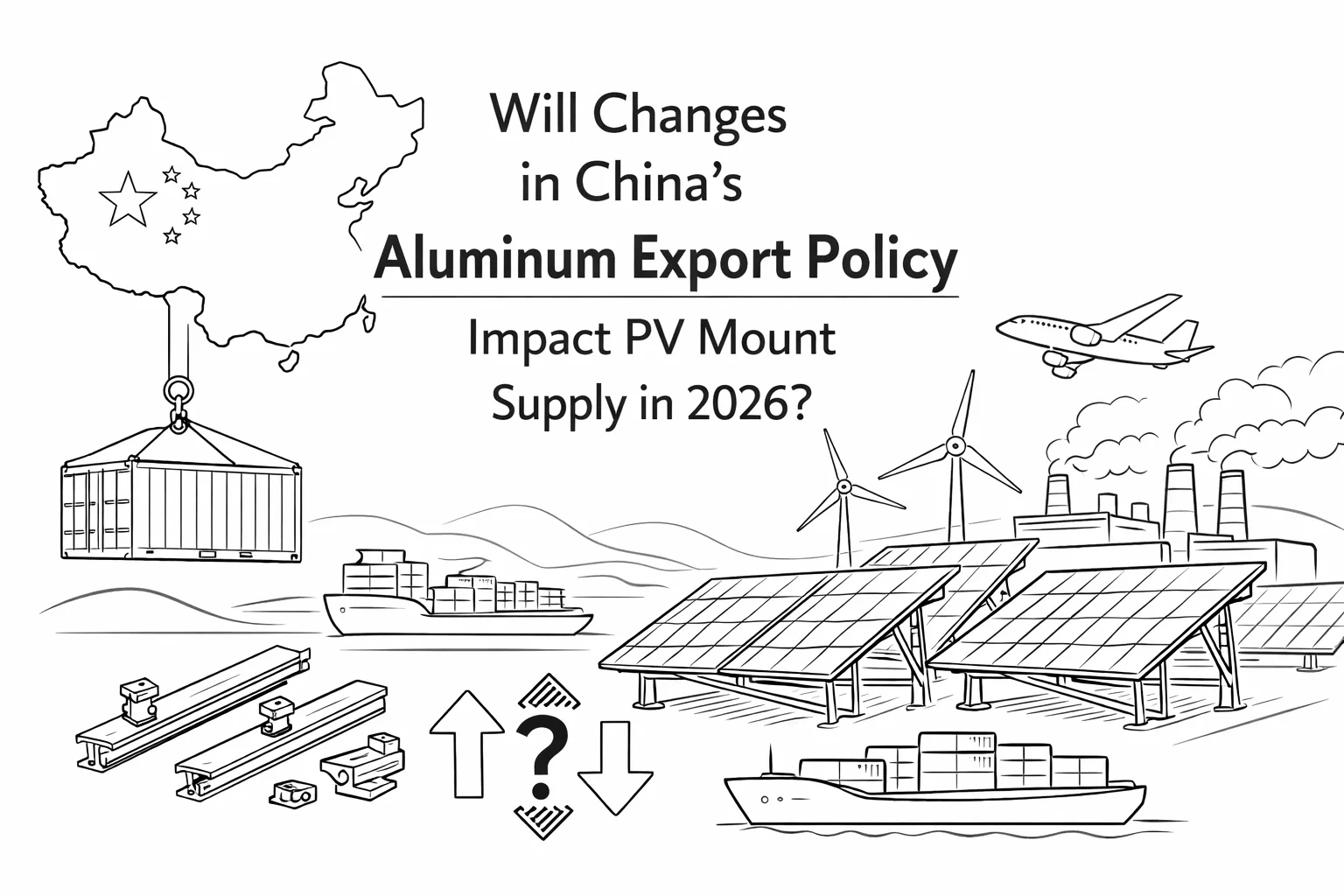
China’s aluminum export policy changes are creating ripples across the solar mounting industry. As the world’s largest producer of both aluminum and solar components, China’s recent decision to cancel VAT export tax rebates for photovoltaic products from April 1, 2026, raises important questions for solar installers and project developers worldwide.[1]
Understanding these policy shifts helps you make informed procurement decisions and protect your project timelines.
What Changed in China’s Export Policy
On January 9, 2026, China’s Ministry of Finance announced the elimination of value-added tax export rebates for PV products starting April 1, 2026. Previously, exporters received a 9% VAT rebate, which effectively reduced their export costs. The cancellation of this rebate means Chinese manufacturers must now absorb these additional costs or pass them along to international buyers.[2]
This policy specifically affects aluminum components used in solar mounting systems, including rails, frames, and structural supports. China has maintained a 45 million tonne aluminum capacity cap since 2017, limiting domestic production growth while global solar demand continues to climb.
Direct Impact on PV Mounting Systems
Solar mounting systems rely heavily on aluminum extrusions for their structural integrity. The 6005A aluminum alloy, commonly used in mounting applications, offers excellent corrosion resistance and weldability, making it ideal for outdoor solar installations.[3]
The policy change affects mounting system costs in three ways:
Manufacturing Costs Rise: Chinese aluminum exporters face higher net costs without the VAT rebate, potentially increasing raw material prices by 6-9% for mounting system manufacturers.
Supply Chain Adjustments: Some Chinese manufacturers may prioritize domestic markets or higher-value exports, potentially tightening aluminum supply for mounting system producers.
Price Transmission: These cost increases flow through the supply chain to end buyers, with industry analysts forecasting mounting system price increases of 10-15% by mid-2026.[2]
Why This Matters for Your Solar Projects
The timing of these changes creates a critical decision window. Projects scheduled for installation in late 2026 or 2027 face the highest exposure to price increases. At LuminVolt, we monitor these supply chain developments closely to help customers navigate market shifts.
Market sources report increased buying activity in early 2026 as buyers seek to secure shipments before the April deadline. This front-loading of demand may create temporary supply constraints even before the policy takes full effect.[4]
Regional Supply Chain Alternatives
While China dominates aluminum production, regional manufacturing capacity has grown significantly. The United States added 39 racking manufacturing facilities since August 2022, representing a 50% increase in domestic mounting system production capacity.[5]
Indonesia has emerged as an alternative source, with aluminum exports up 56% year-to-date as new projects ramp up production. However, Indonesia’s aluminum industry faces infrastructure challenges and policy uncertainties that may limit its ability to fully offset Chinese supply constraints.
European manufacturers are also expanding capacity, though higher energy costs in Europe create pricing challenges compared to Asian producers.
Practical Steps to Protect Your Projects
Secure Early Commitments: Lock in pricing and delivery schedules for projects extending into late 2026 and 2027. Many suppliers offer price protection for early orders.
Evaluate Mounting System Options: Our Fixed Tilt ground mounting systems use aluminum efficiently while maintaining structural integrity. Exploring design optimization can help offset material cost increases.
Diversify Supply Sources: Consider mounting systems manufactured closer to your installation region. Domestic content qualifications may also provide tax advantages that partially offset higher material costs.
Plan for Extended Lead Times: Supply chain pressures often create longer delivery windows. Build additional buffer time into your project schedules.
Long-Term Market Outlook
The China Photovoltaic Industry Association stated that canceling export rebates should “help promote a rational return of foreign market prices and reduce the risk of trade frictions.”[2] This suggests policy stability moving forward, allowing the market to find new equilibrium pricing.
Aluminum markets have historically shown resilience, with prices supported by growing global demand across multiple industries. The metal’s 100% recyclability and 25-plus year lifespan in solar applications continue to make it the preferred choice for mounting systems despite price fluctuations.
Solar Energy Industries Association data shows American-made solar mounting systems create secondary demand for U.S. steel and aluminum, demonstrating how policy changes can reshape regional manufacturing ecosystems.[5]
Making Informed Decisions
China’s aluminum export policy changes will affect PV mounting supply and pricing in 2026, but the impact varies by region, project timing, and procurement strategy. Buyers who act proactively can navigate these changes while maintaining project economics.
The solar industry has weathered supply chain disruptions before, from the 80% aluminum price jump in 2020-2021 to pandemic-related logistics constraints.[6] Each challenge has strengthened supply chain resilience and accelerated regional manufacturing development.
Ready to secure your mounting system supply for 2026 and beyond? Contact our engineering team for a complimentary consultation and learn how we can help optimize your solar project for changing market conditions.