
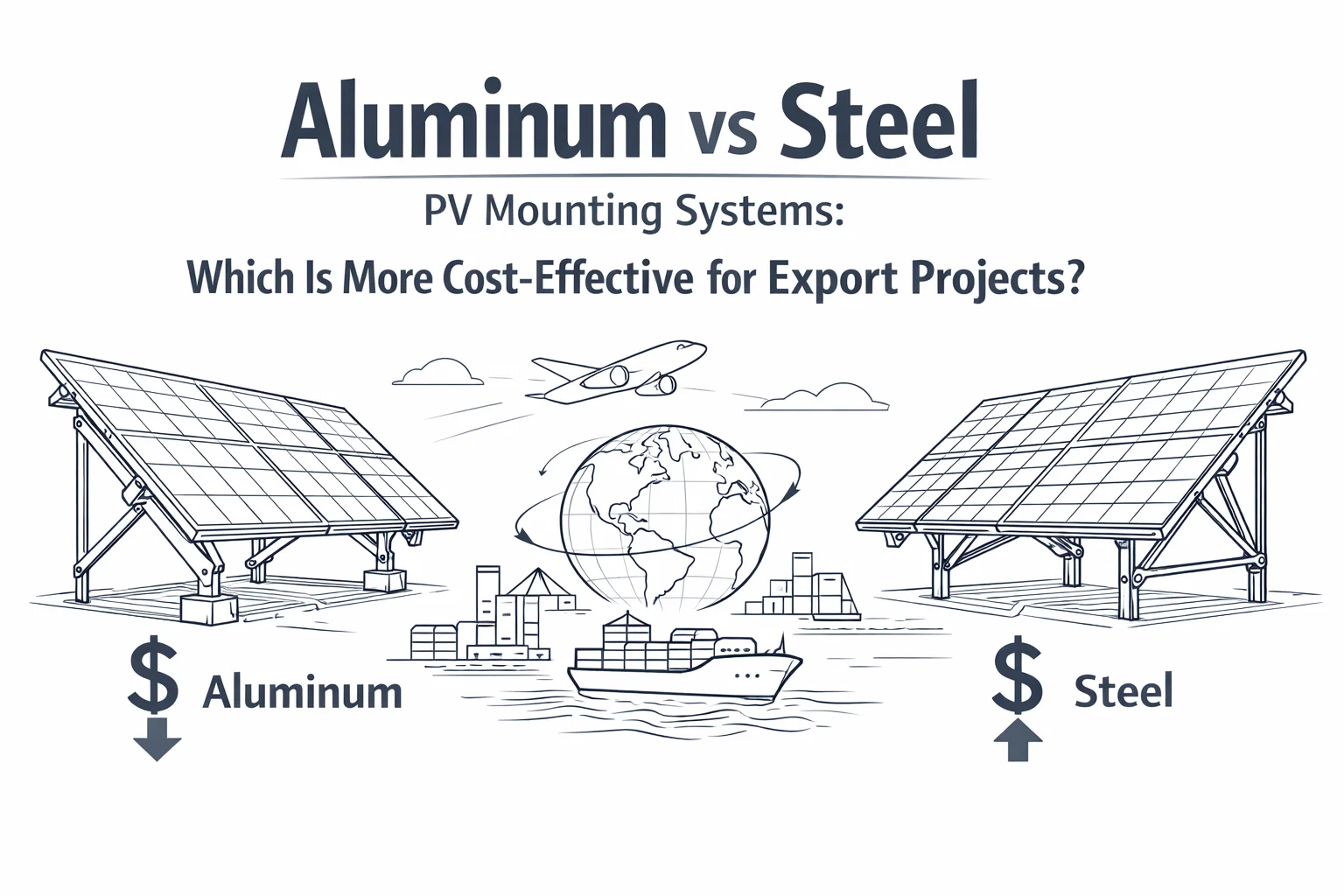
Choosing between aluminum and steel mounting systems can make or break your solar project budget. The decision affects everything from shipping costs to installation speed and long-term maintenance expenses.
For export projects, this choice becomes even more critical. You need to balance upfront material costs against transportation expenses, local installation capabilities, and the specific climate conditions at your project site. Let’s break down which material delivers better value for your next international solar installation.
Understanding the Core Differences
Steel mounting systems use galvanized or hot-dip coated Q235B steel, offering exceptional structural strength. These systems handle heavy wind and snow loads, making them popular for utility-scale ground installations.[1]
Aluminum systems, typically AL6005-T5 alloy, weigh about 40% less than steel equivalents. This natural corrosion resistance eliminates the need for additional protective coatings, which directly impacts your maintenance budget over the system’s 25-year lifespan.[2]
Cost Analysis for Export Projects
Material costs tell only part of the story. Steel typically costs 20 to 30% less per kilogram than aluminum at the raw material level. However, export projects face different economics.
Shipping Economics
Transportation costs hit steel systems harder. A typical 1MW ground-mount project requires approximately 30 to 40% more container space for steel compared to aluminum due to weight density. For projects shipping from manufacturing hubs to installation sites across continents, these logistics expenses add up quickly.
Aluminum’s lighter weight reduces both freight costs and customs duties calculated by weight in many markets. Project managers report savings of $0.15 to $0.25 per watt just on transportation for aluminum systems on international projects.
Installation Labor
Steel mounting requires heavier equipment and more workers on site. The additional weight means you need specialized lifting equipment for rooftop installations. Aluminum systems allow smaller crews to complete installation up to 40% faster, cutting labor costs significantly in markets with high wage rates.[3]
Research from industry studies shows that despite higher material costs, aluminum mounting systems can achieve lower total installed costs when transportation and labor factors are included in the calculation.[4]
Application-Specific Recommendations
Rooftop Systems
Aluminum wins decisively for rooftop applications. The reduced structural load matters tremendously when retrofitting existing buildings. You avoid costly roof reinforcement work that steel systems often require. Every kilogram matters when calculating load-bearing capacity, and aluminum delivers the necessary strength at a fraction of the weight.
Explore our Pitched Metal Roof and Flat Roof mounting solutions designed specifically for weight-sensitive installations.
Ground-Mount Projects
Steel makes more sense for large utility-scale ground installations, particularly in regions with extreme weather. The material’s superior load-bearing capacity handles wind speeds exceeding 180 km/h and snow loads beyond 2.4 kN/m² without requiring oversized components.
However, aluminum ground systems work excellently in moderate climates. The faster installation timeline can compress project schedules by weeks, bringing revenue generation online sooner. For export projects with tight completion deadlines, this time advantage translates directly to financial returns.
Visit Luminvolt to review our complete range of ground-mounting solutions engineered for different climate zones.
Coastal and Humid Environments
Aluminum dominates in coastal installations. Salt air accelerates corrosion on galvanized steel, requiring more frequent maintenance inspections and eventual component replacement. Even hot-dip galvanized steel develops rust spots within 7 to 10 years in harsh coastal conditions.
Aluminum forms a self-protecting oxide layer that resists salt corrosion naturally. This performance difference reduces lifetime maintenance costs by 60 to 70% compared to steel in coastal environments.[5]
Making the Right Choice for Your Project
Start by evaluating these factors:
Climate conditions at the installation site. Steel handles extreme snow and wind loads better, while aluminum excels in corrosive environments.
Transportation distance and costs. Longer shipping distances favor aluminum due to weight savings.
Local labor rates and availability. High labor costs make aluminum’s faster installation more attractive.
Project timeline constraints. Aluminum accelerates installation schedules significantly.
Maintenance access and costs. Remote locations benefit from aluminum’s minimal maintenance requirements.
For most export projects combining moderate climates with long shipping distances, aluminum mounting systems deliver superior total cost of ownership. The material’s combination of low maintenance, fast installation, and reduced transportation expenses outweigh the higher initial material cost.
Steel remains the optimal choice for utility-scale projects in extreme weather zones where maximum structural strength justifies the additional logistics and installation complexity.
According to the U.S. Department of Energy, mounting systems represent approximately 10 to 15% of total installed PV system costs, making this decision critical for project economics.[6]
Final Considerations
Calculate your total project costs including all factors: material pricing, international shipping, customs duties, installation labor, equipment rental, and projected maintenance over 25 years. This comprehensive analysis reveals the true cost difference between aluminum and steel for your specific export project.
Both materials have earned their place in the solar industry. Your choice depends on matching material properties to your project’s unique combination of location, budget, timeline, and performance requirements.