
Von dem Ingenieurteam von Luminvolt
A Solar-Tracker vs. Festmontage ist eine Abwägung zwischen Ertrag und Kosten. Ein einachsiger Tracker bringt gegenüber einem festen Freiflächengestell typischerweise 15–25 % mehr Jahresenergie, bedeutet aber auch Motoren, Regler und zusätzlichen O&M-Aufwand.
Dieses Handbuch ist der vollständige Vergleich zwischen Solar-Tracker und festem Montagesystem: Wie ein Tracker funktioniert, Einzelachsig vs. Dualachsig, CAPEX und Amortisationszeit, und die Orte, an denen ein fest installierter Bodenbefestigung immer noch gewinnt. Wenn Sie eine saisonale Veränderung ohne Motoren meinen, dann ist das fest oder verstellbar, kein Tracker. Wenn Sie bereit sind, die Hardware auszuwählen, öffnen Sie das Hersteller von Einzelachs-Solar-Trackern seite.
Was ist ein Solar-Sonnen-Tracker und wie funktioniert er?
A sonnenlicht-ortung ist eine automatisierte mechanische Montagekonstruktion, die die Ausrichtung der Photovoltaik-Panels ständig so anpasst, dass sie direkt zur Sonne von Sonnenaufgang bis Sonnenuntergang zeigen. Photovoltaik-Panels erzeugen ihre maximale Leistung, wenn Sonnenlicht sie in einem perfekten 90-Grad-Winkel trifft. Da sich die Erde dreht, bewegt sich die Sonne am Himmel, wodurch stationäre Paneele während der frühen Morgen- und späten Nachmittagsstunden an Effizienz verlieren.
Moderne Tracker lösen dieses Problem mithilfe von drei Hauptkomponenten:
- Sensoren und astronomische Algorithmen: Das System berechnet die genaue Position der Sonne mithilfe von GPS-Koordinaten, Zeit und gelegentlich von Lichtsensoren, um extreme Bewölkung oder diffuse Lichtverhältnisse zu kompensieren.
- Steuerungen: Das Bordcomputer verarbeitet die Positionsdaten und ermittelt den optimalen Neigungswinkel für die Modularrays.
- Aktoren und Motoren: Diese mechanischen Komponenten treiben die Stahlkonstruktionen physisch an und drehen die schweren Paneelarrays sanft, um den Berechnungen des Controllers zu entsprechen.
Einachsige vs. Zweiachsige Solartracking-Systeme
Bei der Auswahl eines Solartracking-System, wählen Entwickler typischerweise zwischen Einzel- und Doppelachs-Konfigurationen. Die Entscheidung hängt von der Verfügbarkeit von Grundstücken, der geografischen Lage und dem Budget ab.
Solartracker mit einer Achse
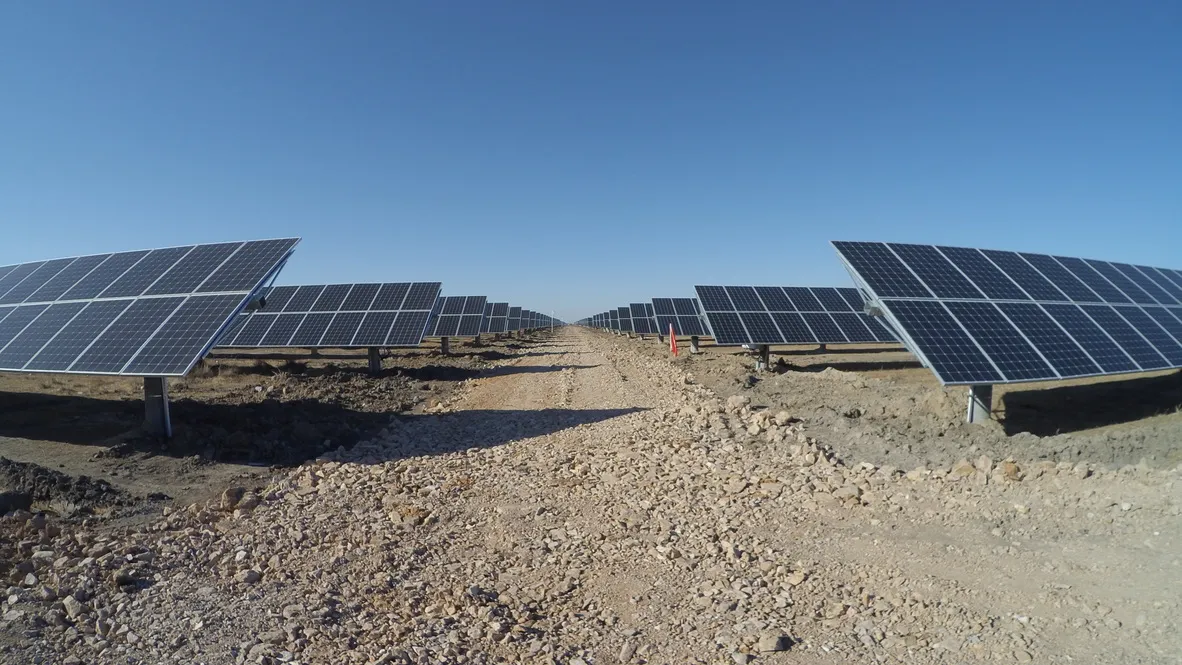
Einachsige Tracker drehen die Solarmodule entlang einer einzigen Linie – normalerweise von Nord nach Süd. Sie verfolgen die Bewegung der Sonne von Ost nach West über den Tag. Diese Konfiguration stellt den kommerziellen Standard für Solarparks im großen Maßstab dar.
Sie bieten eine Steigerung der Energieproduktion von 15% auf 25% im Vergleich zu fest montierten Systemen. Da sie nur eine Bewegung entlang einer Ebene erfordern, werden weniger Motoren und Steuerungselemente verwendet, wodurch die Installations- und Wartungskosten sehr wettbewerbsfähig bleiben.
Doppelachs-Solar-Tracker
Zweiax-Tracker bewegen sich sowohl in Ost-West- als auch in Nord-Süd-Richtung, wodurch sie perfekt auf die Sonne ausgerichtet werden können, unabhängig von Jahreszeit oder Tageszeit. Obwohl sie die Energieerzeugung um bis zu 40% steigern können, sind sie strukturell komplex, erfordern einen erheblichen Abstand zwischen den Anlagen, um Verschattung zu vermeiden, und erfordern häufige, teure Wartung.
Für die meisten kommerziellen Projekte bieten Einzelachs-Tracker das wirtschaftlichste Verhältnis von hoher Leistung und überschaubaren Investitionskosten.
Maximieren Sie Ihren Solar-ROI
Implementieren Sie unser Sun Walker einachsiger Solar-Tracker zur Erfassung von bis zu 25% mehr Energieertrag mit minimalen Wartungskosten.
Vergleichen Sie die LuminVolt Tracker-SystemeSolar-Tracker vs. Festmontage: ROI
Projektfinanzierer schauen sich den LCOE an. Hier ist, wie sich ein Solar-Tracker mit einer Achse mit einer traditionellen festen Montage vergleichen.
- Kapitalausgaben (CAPEX): Ein Überwachungssystem erhöht die anfänglichen Kosten für die Befestigung und Installation. Sie müssen Motoren, Controller und spezielle Fundamente kaufen. Allerdings, da jedes Panel mehr Strom erzeugt, benötigen Sie weniger Panels, um die gleiche Gesamtleistung zu erzielen, wodurch die Hardwarekosten teilweise ausgeglichen werden.
- Optimierung der Energieausbeute: Ein Überwachungssystem erweitert die tägliche Produktionskurve. Anstatt eines steilen Anstiegs um Mittag, erzeugt das System hohe Leistung von Mitte des Vormittags bis zum späten Nachmittag. Diese breitere Produktionskurve ist für Stromabnahmeverträge (PPAs) von großem Wert, die Prämien für Energie zahlen, die während der Stoßzeiten am Abend geliefert wird.
- Betrieb und Wartung (O&M): Systeme mit fester Neigung bestehen aus statischen Stahl- oder Aluminium-Haltern, die fast keine Wartung erfordern. Tracker haben bewegliche Teile. Sie müssen Mittel für periodische Schmierung, Inspektionen der Aktuatoren und Kalibrierung der Sensoren einplanen. Zum Glück verwenden moderne Systeme versiegelte, selbstschmierende Lager und robuste Motoren, die die Ausfallraten unter 1% halten.
Auswahl der Baustelle und technische Überlegungen
Nicht jede Website eignet sich für ein Tracking-System. Wenn Ihr Projekt auf sehr unebenem Gelände mit steilen Hängen liegt, das Gelände ebnen um die langen Trackerreihen zu ermöglichen, ist dies oft kostspielig. In diesen Fällen eignen sich hochflexible, fest geneigte Lösungen besser.
Zusätzlich müssen die Reihen mit festem Neigungswinkel weiter voneinander entfernt sein als die Reihen mit variabler Neigung, um zu verhindern, dass die Morgenschatten und Abendstunden einer Reihe auf die nächste fallen (ein Phänomen, das als „Zwischenreihe-Schatten“ bezeichnet wird). Wenn Sie sehr wenig Land haben, könnte eine hochdichte Anordnung mit festem Neigungswinkel mehr Gesamtleistung pro Hektar erzeugen, auch wenn die Effizienz einzelner Module sinkt.
Häufig gestellte Fragen
Was ist der Unterschied zwischen einem Solartracker und einem festen Montagesystem?
Ein fester Mast hält die Paneele in einem Winkel. Ein Solar-Tracker dreht das System, um der Sonne zu folgen. Das ist der Unterschied zwischen einem festen Mast und einem Solar-Tracker: mehr Kilowattstunden mit den gleichen Modulen, im Vergleich zu höheren Hardware- und Wartungskosten.
Wie viel mehr Energie produziert ein Solar-Tracker?
Ein Einachs-Tracker erhöht typischerweise die Energieproduktion um 15% bis 25% im Vergleich zu einem System mit fester Neigung. Ein Dualachs-Tracker kann die Produktion um 30% bis 40% erhöhen, wobei dies stark von der geografischen Breite und den lokalen Wetterbedingungen abhängt.
Sind Solarmodule mit Verfolgungssystemen eine lohnende Investition?
Ja, für kommerzielle und großtechnische Projekte. Die zusätzliche erzeugte Strommenge über die 25-jährige Lebensdauer der Solaranlage überwiegt die zusätzlichen Installations- und Wartungskosten erheblich, was zu einer geringeren Levelized Cost of Energy (LCOE) führt.
Funktionieren Solar-Tracker mit bifazialen Solarpanels?
Absolut. Einachsige Tracker sind die ideale Ergänzung für bifaziale Module. Da der Tracker die Paneele höher vom Boden abhebt und der Sonne folgt, erhält die Unterseite der Paneele einen erheblichen Anteil an reflektiertem Licht (Albedo), was Ihre Energieerträge erhöht.
Entscheiden Sie sich noch nicht? Nehmen Sie unseren fünf-Fragen-Test: sind Solar-Tracker eine lohnende Investition für Ihr Projekt?